24 January 2024·09:45 AM
5 Essential First Aid Skills Everyone Should Know
Simple techniques that can help you respond quickly and save lives in everyday emergencies.

Aabhi ShaiContinence Nurse Specialist
On This Page
Introduction
Accidents can happen anytime — at home, at work, or in public spaces. Knowing basic first aid doesn't just make you more prepared; it can make the difference between a minor incident and a life-threatening situation. You don't need to be a medical professional to help — just a few essential skills can go a long way.
Why Speed Matters in a First Aid Emergency
In any medical emergency, the speed of your response is often as important as the treatment itself. Within the first few minutes of an incident, bystander action can prevent a situation from escalating into something far more serious. First aid knowledge bridges the gap between the moment of injury and the arrival of professional help.
Step 1 — Assess the Scene
Before approaching any casualty, take a moment to assess your surroundings. Check for dangers that could put you or the victim at further risk — traffic, electrical hazards, or unstable structures. Only proceed when it is safe to do so. Your own safety is the first priority.
Golden Rule:
Never put yourself in danger to help another. A second casualty makes the situation worse, not better.
Treating Cuts and Wounds
Minor cuts and scrapes are common, but improper care can lead to infection.
What to do:
- Clean the wound gently with water.
- Apply antiseptic if available.
- Cover with a clean bandage.
When it's serious:
If bleeding doesn't stop after applying pressure for 10 minutes, seek medical help immediately.
Performing CPR
CPR is a life-saving technique used when someone's breathing or heartbeat has stopped.
Basic steps:
- Call emergency services immediately.
- Push hard and fast in the center of the chest (about 100–120 compressions per minute).
- Continue until help arrives.
Step 2 — Control Bleeding Quickly
Uncontrolled bleeding is one of the leading causes of preventable death in trauma situations. To control bleeding effectively:
What to do:
- Apply firm, direct pressure to the wound using a clean cloth or bandage.
- Maintain continuous pressure — do not lift the dressing to check.
- If the cloth becomes saturated, add more material on top and continue pressing.
- Seek emergency medical help if bleeding persists beyond ten minutes.
Step 3 — Recognise Signs of Shock
Shock is a life-threatening condition that can follow serious injury or illness. Recognise the signs early:
Signs of shock:
- Pale, cold, and clammy skin.
- Rapid, weak pulse and fast breathing.
- Dizziness, confusion, or loss of consciousness.
What to do:
Lay the person down, keep them warm with a blanket, and elevate their legs unless a head, neck, or spinal injury is suspected. Do not give food or water. Call emergency services immediately.
Handling Burns
Burns can range from mild to severe and require quick attention.
For minor burns:
- Cool the burn under running water for 10–15 minutes.
- Cover with a sterile, non-stick dressing.
Avoid:
- Applying ice directly.
- Using oils or home remedies.
Remove jewellery near the burned area but do not peel away clothing that has stuck to the skin. Seek medical advice for anything more than a superficial burn.
Managing Choking
Choking can quickly become life-threatening if not addressed immediately.
Signs of choking:
- Inability to speak or breathe
- Clutching the throat
- Panic or distress
What to do:
- Perform abdominal thrusts (Heimlich maneuver)
- Continue until the object is expelled or help arrives
Step 5 — Managing a Suspected Fracture
If a fracture is suspected, immobilise the injured limb in the position found — do not attempt to straighten it.
What to do:
- Use a splint or improvised support to stabilise the injured area.
- Apply ice wrapped in cloth to reduce swelling.
- Monitor for signs of circulation problems such as numbness, tingling, or bluish colour.
Avoid moving the injured area if a fracture is suspected and seek emergency care without delay.
Build Your First Aid Confidence
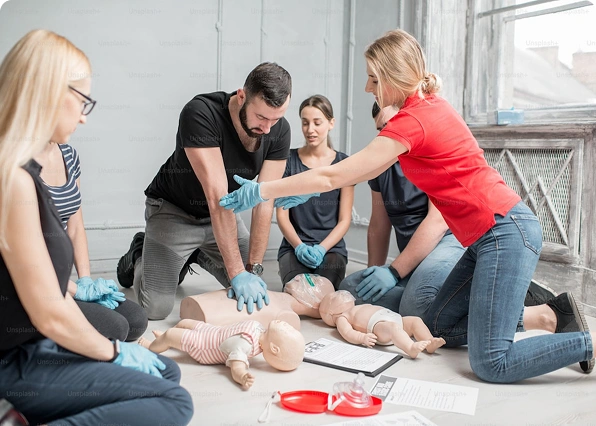
Knowledge without practice fades quickly. Attending a hands-on first aid course reinforces these skills and helps you respond calmly under pressure. Many courses now offer evening or weekend sessions to suit busy schedules.
Recommended providers:
- British Red Cross — certified first aid courses nationwide.
- St John Ambulance — workplace and community training programmes.
- Local hospitals and GP surgeries — community first aid workshops.
Equip Your Home and Workplace
A well-stocked first aid kit is the physical foundation of preparedness. Ensure your kit includes sterile dressings and bandages in various sizes, antiseptic wipes and cream, disposable gloves, scissors, tweezers, adhesive plasters, a digital thermometer, a first aid guidance card or manual, and a foil emergency blanket. Check your kit every six months, replace any expired items, and restock anything that has been used.
Final Thoughts
Learning these basic first aid skills can empower you to act quickly and confidently in emergencies. While these techniques are simple, their impact can be life-saving. If you want to be fully prepared, consider taking a certified first aid or CPR course to gain hands-on experience and deeper knowledge.