23 May 2026·10:00 AM
Professional CPR Training to Help Save Lives
Be prepared with practical solutions for the most frequent workplace accidents.

Aabhi ShaiContinence Nurse Specialist
On This Page
The Critical Importance of CPR
Cardiac arrest is one of the leading causes of preventable death worldwide. When the heart suddenly stops beating, blood flow to the brain and vital organs ceases within seconds. Without intervention, irreversible brain damage can occur in as little as four minutes. Professional CPR training equips individuals with the skills, confidence, and physical technique required to respond effectively in these critical moments.
What Professional CPR Training Covers
A professional CPR training programme goes beyond the basics of chest compressions. Participants learn:
Training covers:
- The physiological basis of cardiac arrest and why immediate CPR is essential.
- Adult, child, and infant CPR techniques with correct hand placement and depth.
- Rescue breathing and the standard 30:2 compression-to-breath ratio.
- Hands-only CPR for situations where rescue breaths are not possible.
- Automated External Defibrillator (AED) operation and integration with CPR.
- Team CPR approaches for multi-rescuer scenarios.
Did you know:
Bystander CPR performed within the first two minutes of cardiac arrest can double or triple survival rates. Professional training ensures you can act without hesitation.
The Science Behind Effective Compressions
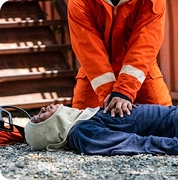
Effective chest compressions are the cornerstone of CPR. Professional training teaches the precise techniques that make the difference:
Key compression guidelines:
- Depth: Compress the chest by at least 5 cm (2 inches) for adults.
- Rate: Maintain 100 to 120 compressions per minute.
- Recoil: Allow the chest to fully rise between each compression.
- Interruptions: Minimise pauses in compressions to less than ten seconds.
AED Training: Demystifying the Defibrillator
Many people feel intimidated by AEDs, but professional training quickly dispels this anxiety. AEDs are designed to be used by members of the public — they provide clear voice instructions and will only deliver a shock when clinically appropriate. Training covers how to locate public AEDs, how to power on and apply the pads correctly, safe zone protocols during shock delivery, and how to seamlessly resume CPR after a shock.
Who Should Pursue Professional CPR Training
Professional CPR training is valuable for a wide range of individuals and organisations:
Ideal for:
- Healthcare professionals and emergency responders requiring up-to-date certification.
- Workplace first aiders in high-risk industries such as construction, manufacturing, and healthcare.
- School and childcare staff who work with young children daily.
- Sports coaches, gym instructors, and leisure facility staff.
- Parents, grandparents, and family caregivers.
- Community volunteers and members of faith organisations.
Certification and Recertification
Professional CPR certifications are typically valid for one to two years. Recertification courses are shorter than initial training — usually two to four hours — but are essential to keep skills current with the latest resuscitation guidelines. Employers in regulated industries are often legally required to maintain evidence of current CPR certification for designated first aiders.
Finding Accredited Training
When selecting a CPR training provider, ensure the course is accredited by a recognised body such as the Resuscitation Council UK, the American Heart Association, the British Red Cross, or St John Ambulance. Accredited courses adhere to evidence-based guidelines and issue certificates that are recognised by employers, regulators, and insurers.