23 May 2026·10:00 AM
Basic First Aid Essentials Everyone Should Know
Discover how certification can improve safety awareness and boost your career opportunities.

Aabhi ShaiContinence Nurse Specialist
On This Page
First Aid Is for Everyone
You do not need a medical degree to save a life. Basic first aid skills are designed to be learned and used by ordinary people in everyday situations. Whether you are a parent, a teacher, a commuter, or a colleague, knowing what to do in the first moments of an emergency gives you the power to make a real difference.
The Primary Survey: DRSABC
When approaching any emergency situation, trained responders use the DRSABC framework to assess the casualty quickly and systematically:
DRSABC stands for:
- Danger — Is the scene safe for you and the casualty?
- Response — Is the person conscious? Tap their shoulders and ask loudly if they are okay.
- Shout — Call for help and ask someone to call emergency services.
- Airway — Open the airway by tilting the head back and lifting the chin.
- Breathing — Look, listen, and feel for normal breathing for up to ten seconds.
- CPR — If not breathing normally, begin chest compressions immediately.
Key insight:
The DRSABC approach ensures you do not miss a life-threatening condition in the rush of an emergency.
Wound Care Basics
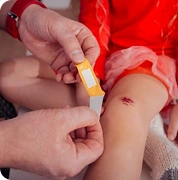
Even minor wounds deserve proper care to prevent infection and promote healing. Clean the wound under running water for at least five minutes, remove any visible debris with clean tweezers, apply antiseptic, and cover with an appropriate dressing. Change the dressing daily and watch for signs of infection — increased redness, warmth, swelling, or discharge. Seek medical advice if infection is suspected.
Burn Care: Cool, Cover, Call
Remember the three Cs for burn treatment: Cool the burn with running water for ten to fifteen minutes, Cover loosely with a sterile dressing, and Call for medical help if the burn is larger than the palm, on the face, hands, feet, or genitals, or if the victim is a child or elderly person. Never break blisters, apply ice, or use home remedies.
Choking: Adults vs Children
The approach to choking differs slightly depending on the age of the casualty:
By age group:
- Adults and children over one year: five back blows followed by five abdominal thrusts, alternating until the obstruction clears.
- Infants under one year: five back blows followed by five chest thrusts — never abdominal thrusts.
- If the casualty becomes unconscious, begin CPR and call emergency services immediately.
When to Call Emergency Services
First aid has important limits. Always call emergency services when:
Call immediately if:
- A person is unconscious, unresponsive, or not breathing normally.
- Bleeding is severe or does not stop with sustained pressure.
- A heart attack or stroke is suspected.
- Burns cover a large area or involve the face, hands, or major joints.
- A fracture involves the spine, neck, or femur.
- A child or infant is involved and you are uncertain of the correct response.
Make It a Habit, Not a Reaction
The best first aiders are those who have practised their skills before they were ever needed. Enrol in a certified course, keep a first aid kit in good order, and revisit your knowledge every year or two. Share what you learn with your family and colleagues — a prepared community is a safer community.