23 May 2026·10:00 AM
Workplace Safety Training to Reduce Risks
From minor injuries to critical events—know how to respond effectively.

Aabhi ShaiContinence Nurse Specialist
On This Page
Training as a Risk Reduction Strategy
Workplace accidents are rarely the result of bad luck. Most are the predictable consequence of inadequate knowledge, poor technique, or a failure to recognise hazards before they cause harm. Structured, targeted safety training is one of the most cost-effective risk reduction strategies available to any organisation.
Legal Requirements for Safety Training
UK employers have a legal duty under the Health and Safety at Work Act 1974 and the Management of Health and Safety at Work Regulations 1999 to provide adequate safety training.
Key regulations include:
- COSHH Regulations — training in the safe handling of hazardous substances.
- Manual Handling Operations Regulations — training in safe lifting techniques.
- Work at Height Regulations — training for all work involving falls from height.
- PUWER — training in the safe use of work equipment.
- First Aid Regulations — training for appointed first aiders in the workplace.
Legal note:
Employers must be able to demonstrate that training has been provided, understood, and applied. Records of attendance, content, and competency assessment are essential.
Designing Effective Safety Training
Safety training that is poorly designed or delivered fails to change behaviour and therefore fails to reduce risk. Effective programmes share several characteristics:
Effective training is:
- Directly relevant to the actual hazards workers encounter in their roles.
- Delivered using a variety of methods — not just classroom lectures or online slides.
- Inclusive of practical elements allowing workers to apply and rehearse skills.
- Assessed to confirm genuine understanding, not just attendance.
- Refreshed at appropriate intervals and after significant incidents.
- Delivered in a language workers can fully understand.
Induction Training for New Employees
New employees are statistically most at risk of workplace injury in their first weeks. A thorough induction training programme is the first and most important risk reduction measure an employer can put in place for new starters.
Induction should cover:
- The organisation's safety policy and the responsibilities of all staff.
- Key workplace hazards and the controls in place.
- Emergency procedures including evacuation routes and fire alarm points.
- Location of first aid facilities and the identities of first aiders.
- Reporting procedures for accidents, near misses, and hazards.
- Any specific PPE requirements for the role.
Task-Specific and Specialist Training
Beyond general induction, many roles require specialist training to ensure workers can carry out specific tasks safely.
Specialist training examples:
- Forklift truck operation — a regulated activity requiring a formal licence and refresher training.
- Confined space entry — requiring entry team and standby personnel to hold relevant certificates.
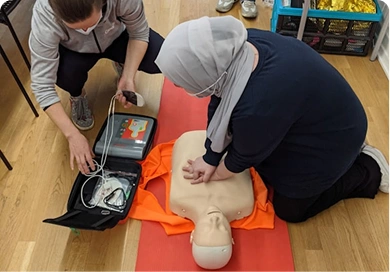
- First aid at work — requiring a three-day course and annual refreshers.
- Manual handling of patients or service users in health and social care.
- Working with asbestos — licensed work requires operatives to hold specific qualifications.
- Electrical installation and maintenance — requiring formal electrical competency certification.
Evaluating Training Effectiveness
Training spend without evaluation is a cost without measurable return. Use a structured framework to assess whether safety training is working.
Evaluation levels:
- Reaction level: ask participants whether the training was relevant and well-delivered.
- Learning level: test knowledge retention through post-training assessment.
- Behaviour level: observe whether safe working practices are consistently applied after training.
- Results level: track whether incident rates, near-miss frequency, and lost time injury metrics improve over time.
Building a Continuous Learning Environment
Safety training is most effective when it is embedded in a culture of continuous learning rather than treated as an isolated event. Toolbox talks — brief, informal safety discussions held at the start of shifts or before specific tasks — keep safety front of mind between formal training sessions. Incident debrief sessions that focus on learning rather than blame reinforce the value of reporting and sharing knowledge.